
Newt’s Ethics of Observation
Fantastic Beasts and Where to Find ThemThis flow traces how Newt’s field practice balances curiosity, physical risk, respect for creatures, and the limits of human control.
increasing Bearing strength in each event
 decreasing
Bearing strength in each eventdecreasingInterest Before Expertise
Interest Before Expertise
A child’s close attention
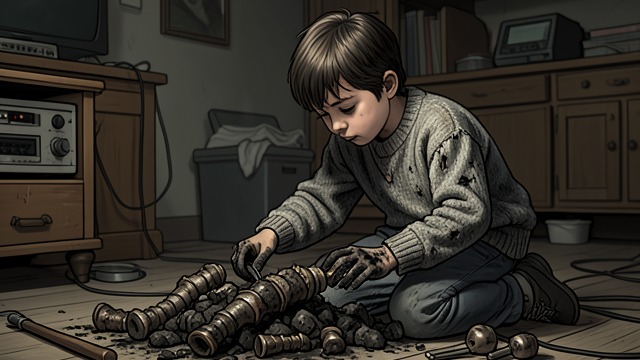
Newt Scamander’s early fascination is physical and exploratory: he spends hours dismembering Horklumps. His interest is not yet a formal method, but it begins with sustained attention to a creature’s structure.
A guided curiosity
His mother’s enthusiasm for Hippogriffs gives him a model of creatures as beings worthy of active interest. Childhood fascination becomes the raw material of a later discipline.
The book treats knowledge as something that begins in curiosity but must grow beyond it. Attention is the first step; responsible understanding requires experience and care.
Learning in Their Habitats
Learning in Their Habitats
Observation at close range
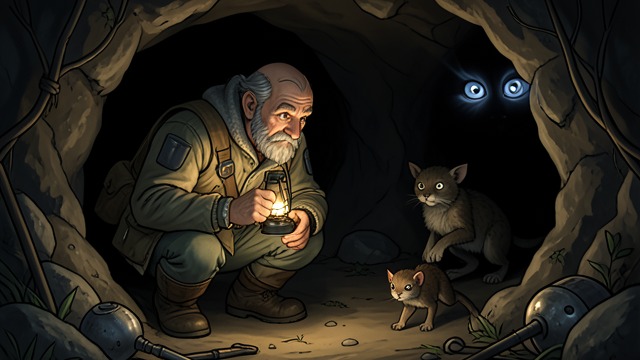
Newt visits nests, lairs, and burrows to study magical animals where they live. He watches habits, encounters their powers, and sometimes earns their trust through patient contact.
The risk of proximity
Fieldwork can also put him in danger, and he occasionally has to beat a creature off with his travelling kettle. His account does not present observation as effortless control.
The method makes habitat and behaviour essential to understanding. A creature cannot be reduced to a name or danger rating when its ordinary life offers the most important evidence.
A Creature’s Own Boundaries
A Creature’s Own Boundaries
Respectful distance
Some creatures avoid human contact, hide from observers, or live beyond easy access. The Unicorn is fleet and wary; the Demiguise can become invisible when threatened.
Permission and expertise
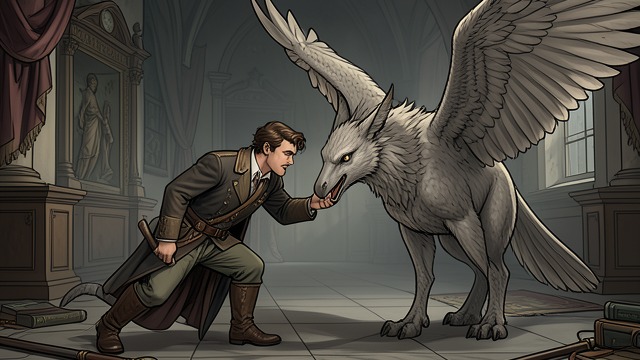
Approaching a Hippogriff requires eye contact and a bow, while its response determines whether the visitor may come closer. The instructions make respectful conduct part of practical knowledge.
Such encounters challenge the assumption that curiosity gives humans a right to approach. Observation succeeds when the creature’s behaviour matters as much as the observer’s intention.
Classification Without Simple Praise
Classification Without Simple Praise
Danger is not the only measure
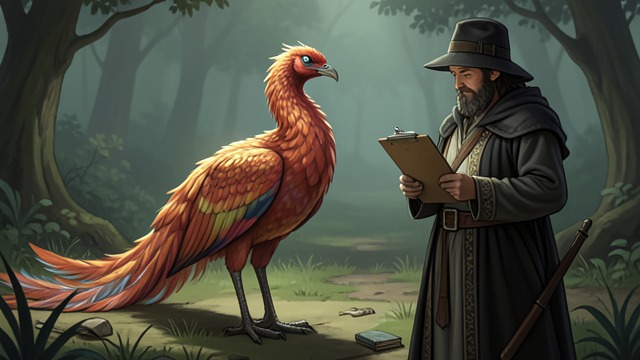
The Ministry’s ratings describe perceived dangerousness, but the book explains that some highly rated creatures are not aggressive. The Phoenix receives a demanding rating because few wizards can domesticate it, not because it is vicious.
Respect beyond utility
The Centaur’s rating likewise signals that it deserves respect rather than marking it as unusually hostile. A number cannot explain a creature’s intelligence, autonomy, or value.
Newt’s framing warns readers against confusing manageability with worth. The classification is useful guidance, but responsible study requires interpretation rather than obedience to a label alone.
Protection as Shared Responsibility
Protection as Shared Responsibility
More than human convenience
Newt asks why magical communities continue protecting and concealing even savage, untameable beasts. His answer centres on the duty to let future generations encounter their strange beauty and powers.
A living world to inherit
The book presents preservation as a responsibility extending beyond immediate usefulness. Habitats, breeding limits, and restraint in trade help ensure that creatures remain part of the world.
The argument turns magizoology from collecting knowledge into stewardship. Understanding magical creatures matters partly because it can encourage people to protect what they do not own or fully control.
around 1904
during Newt’s journeys across five continents
during the book’s accounts of capture and approach
when the Ministry ratings are introduced
in Newt’s concluding reflections
